1. Lack of a strong, well-structured business plan
Are you considering starting a business but don’t know where to begin? Since funding is often the key to success, fundraising is one of the most crucial steps in the process of starting a business, as any initiative of this kind requires an initial investment.
It can be difficult to know how to go about securing startup funding. What’s more, if you’re new to the business world and to entrepreneurship, you’re more likely to make mistakes.
Don’t worry ! In this article, we share five mistakes to avoid when raising funds.
The first step in starting your business is to develop a solid business plan !
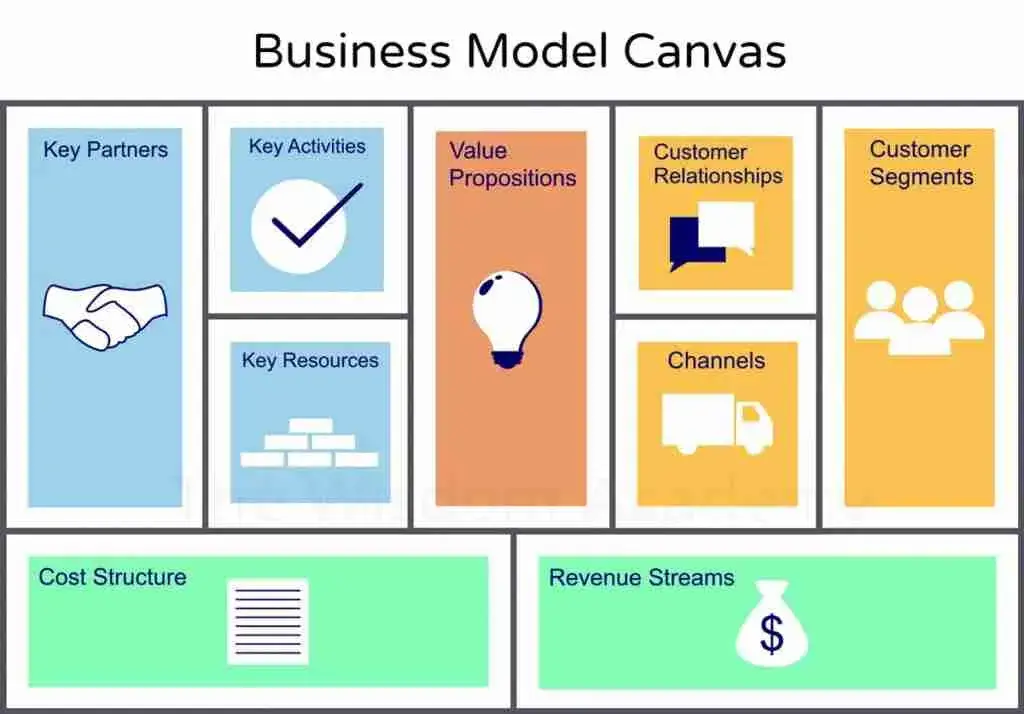
This Business Model Canvas helps describe your economic model. It brings together all the upstream and downstream components of your business, including estimates of day-to-day expenses, a market analysis of your product or service, and key performance indicators, among others.
When carefully written, this business plan gives investors a clear understanding of your project and what to expect from it.
In addition, a thorough cash flow analysis is essential for investors to take your project seriously and to be willing to support the risk involved.
2. Going into too much detail too early
Our design features offer a full range of tools to create visually stunning websites. Use WYSIWYG editors, drag-and-drop building blocks, and Bootstrap-based templates for effortless customization. With professional themes and an intuitive system, you can design websites with ease and precision—ensuring a flawless, responsive result.
3. Exploring only a few funding options
It can be difficult to sit down and assess all the funding options available to you. Yet it is a crucial part of your journey. Typical ways to secure funding include taking out a bank loan, borrowing from family and friends (love money), or using long-term savings.
However, there are many other options worth exploring, such as grants and government-backed loans.
Other possibilities include non-profit organizations and private investors. Seeking multiple sources of capital increases your chances of securing the funding you need. In addition, networking exposes you to key players in the business world as well as potential mentors.
To gain a clearer understanding, we invite you to read our article "Guide to the funding options for your fundraising journey"
4. Reaching out to investors without doing your research
The investors and/or grant-making bodies you target should primarily be organizations that have funded companies like yours or similar ones. They are more likely to support your startup because it aligns with their experience. At the same time, they can bring valuable expertise and act as mentors as you grow your business. This is particularly true of business angels-private investors with entrepreneurial experience who, in addition to investing in your company, can provide strategic guidance.
In addition, when looking for startup funding, it’s worth thinking outside the box. Investors who don’t typically fund your type of business may still be interested if you can show them how your idea could improve or add value to their own market.
During your research, it’s also wise to identify the criteria an investor uses when deciding which businesses to fund.
5. Asking for too much or too little money
When seeking startup funding, you may be tempted to ask for more money than you actually need in order to cover potential risks and unforeseen expenses.
On the other hand, you might think your chances of securing funding are higher if you ask for less than you actually need. But it doesn’t work that way-and here’s why:
First, most investors will quickly see that you have underestimated the level of funding required to succeed. They may conclude that you don’t fully understand what you’re doing.
Second, even if you secure the amount you asked for, the money will run out quickly because it wasn’t sufficient from the start.
It is therefore best to ask for the amount you truly need.
In truth, it can be difficult to determine exactly how much funding your startup needs. Depending on the business, the amount may be substantial. In that case, discussing it with a financial advisor is often the best solution.
Commencez à écrire ici ...